

9 Tips For Lighting A Long Driveway
There is something wonderful about having a long driveway that sets your home back from the road, but coming home after dark shouldn’t feel like a high-stakes obstacle course.
When the sun goes down and that familiar path turns into a pitch-black void, navigating the twists and turns gets stressful fast.
The good news is that you don’t need to flood the entire driveway with bright lights to get great results.
In this post, we’ll go over nine practical tips that can help you light a long driveway that looks great and works well every night.
1. Stagger Your Lights Instead Of Lining Them Up
When people think about lighting a driveway, their first instinct is usually to place fixtures directly opposite each other, perfectly mirrored all the way down.
It seems logical, right?
But doing this creates a rigid, harsh look that forces the eye straight down a tunnel of light.
Instead, you want to stagger them. Put one light on the left, move down a bit, and place the next one on the right in a zigzag pattern.
This softens the entire visual landscape and guides a driver’s eyes naturally along the curves of the path.
On top of looking way more sophisticated and relaxed, this trick instantly cuts the number of fixtures you need to buy in half, saving your budget.
Also Read: Lights For Long Driveways
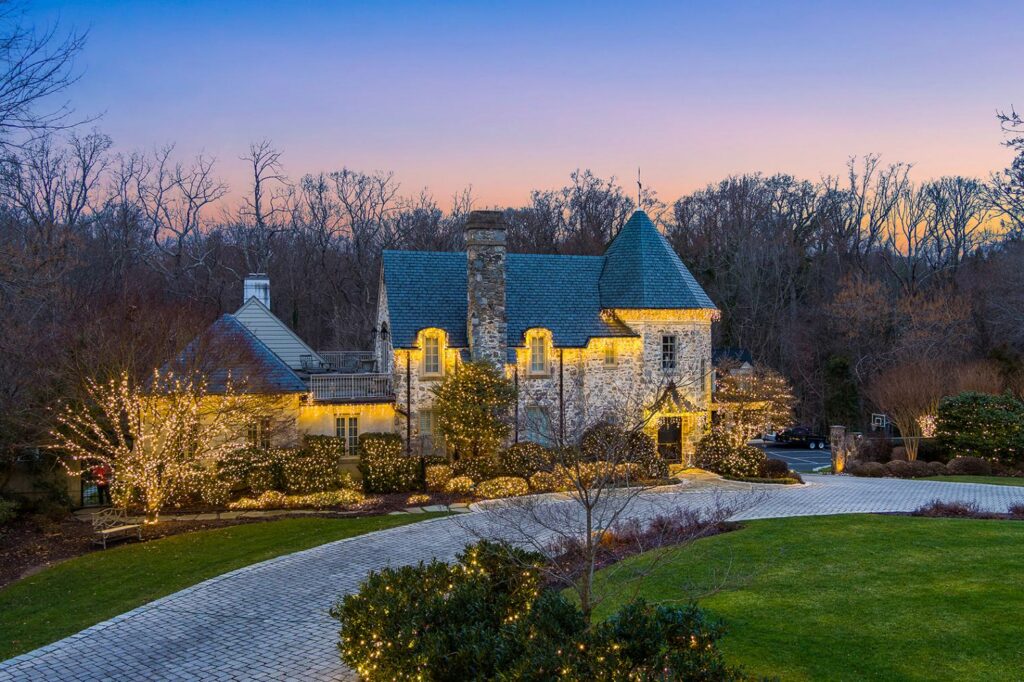
2. Focus On “Zones” Rather Than The Entire Length
One of the biggest mistakes people make is trying to light every inch of a long driveway equally.
That usually increases costs without delivering much additional benefit.
Instead, think in terms of zones.
Certain areas deserve more attention than others. These include the driveway entrance, sharp curves, slopes, intersections, parking areas, and the space near the garage.
These locations are where drivers need the most guidance.
By concentrating lighting in these zones, you improve safety while avoiding unnecessary fixtures along straight sections that are already easy to navigate.
This strategy also creates a cleaner look because the light naturally draws attention to important areas rather than flooding the entire property.
3. Space Fixtures Based On Their Light Output
It is incredibly tempting to just guess the spacing, buy a bunch of lights, and hope for the best.
That usually ends up with annoying overlapping bright spots or massive patches of total darkness.
The trick is to look at the actual light output of the fixture you choose.
A standard path light usually throws a soft glow about four to six feet wide. Because you are staggering them, you can space your fixtures roughly eight to twelve feet apart on alternating sides.
This gives you a gentle, continuous guide without creating a blinding wall of light, keeping the whole vibe smooth and effortless.
Also Read: LED Light Bulbs That Look Like Incandescent
4. Mix Solar And Low-Voltage Wired Systems
Trenching wires down a massive driveway can quickly turn into an absolute nightmare for your back and your wallet.
You don’t have to choose just one power source, though. Mixing and matching wired and solar options is the ultimate secret weapon for long properties.
Near the house and right at the main entrance, use low-voltage wired LED systems. These areas need reliable, bright, and consistent lighting every single night.
For those long, straight middle stretches where digging trenches is impractical, pop in some high-quality, commercial-grade solar lights.
They catch the sun all day and do the heavy lifting at night without adding a single cent to your electricity bill.
5. Use Downlighting (“Moonlighting”) For A Natural Look
If you are blessed with large, mature trees lining your driveway, you have the perfect opportunity to try moonlighting.
Instead of putting all your lights on the ground pointing up, you mount fixtures high up in the tree branches and angle them downward.
The light filters through the leaves and branches, casting beautiful, dappled shadows on the ground below. It feels incredibly natural, almost like a bright full moon is permanently hovering over your property.
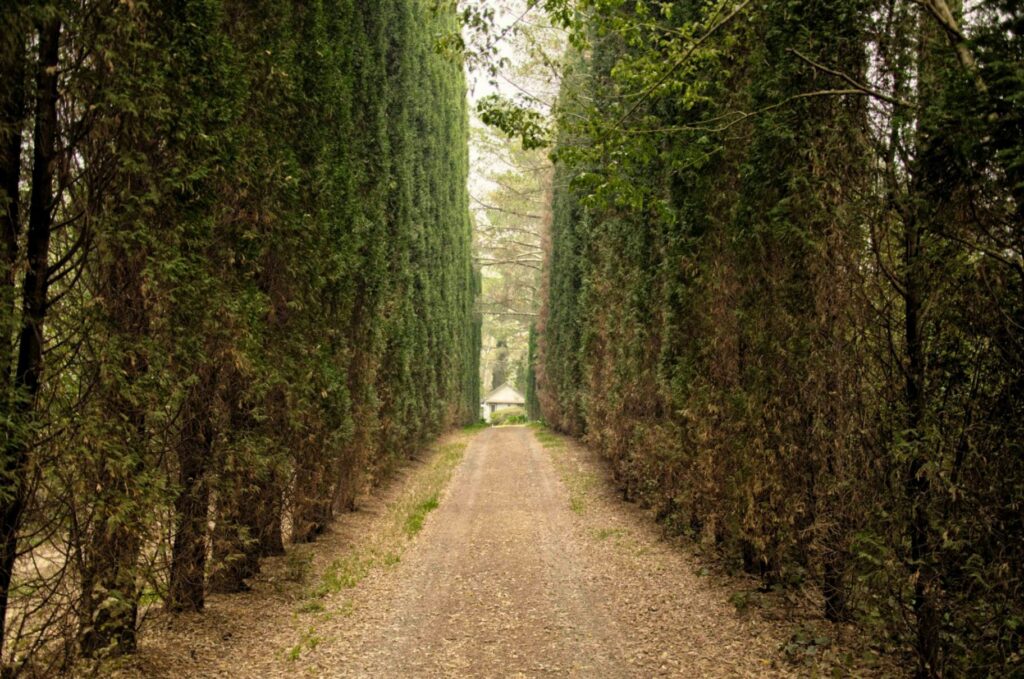
Plus, it provides an amazing, wide wash of ambient light that keeps the driveway safe while completely avoiding any direct glare in a driver’s eyes.
6. Keep The Lumens Low To Prevent Glare
When it comes to outdoor illumination, more power is definitely not better.
Driveway lighting is meant for orientation and guidance, not for lighting up a nighttime football match. If you buy bulbs that are too bright, you will end up blinding yourself every time you pull in after dark.
Look for bulbs that sit comfortably in the 100 to 300 lumen range for your path and stake lights.
Pair that low output with a warm color temperature, around 2700K to 3000K, to keep things looking cozy.
It gives just enough glow to see the edges of the pavement clearly while keeping the overall atmosphere incredibly relaxed and inviting.
Also Read: JellyFish Lighting Alternatives
7. Choose Flush-Mount Lights If You Have Tight Turns
Traditional stake lights look lovely, but they have a massive target on them if your driveway is narrow or features sharp, tricky turns.
Eventually, a delivery truck will back up too far, a guest will misjudge a curve, or you will get a bit too enthusiastic with the lawnmower.
Flush-mounted “puck” lights or illuminated pavers sit completely flat, right in the ground or embedded along the edge of the driveway material. You can drive a massive SUV right over them without causing a single bit of damage.
They keep the path cleanly defined while completely eliminating the risk of broken fixtures.
8. Use Accent Lighting To Define Boundaries
Who says you actually have to put lights on the pavement itself?
Sometimes, the most beautiful way to light a long driveway is to illuminate the features running alongside it.
If you have a gorgeous stone wall, a neat hedge, or architectural landscaping framing your driveway, aim well-hidden uplights or spotlights at those features.
The light will bounce off the stones or leaves, naturally reflecting a soft, indirect glow back onto the driving surface.
It defines the borders of your property beautifully, adds incredible visual depth, and makes your entire yard look like a professionally designed resort.
9. Factor In Automation And Smart Controls
Modern lighting systems offer far more convenience than simple on-and-off switches.
Smart controls allow homeowners to automate their driveway lighting based on schedules, sunset times, motion detection, or smartphone commands.
Some popular automation options include:
- Dusk-to-dawn operation
- Motion-activated lighting
- Smartphone control
- Timer-based schedules
These features can improve security, reduce energy consumption, and eliminate the need to manually manage the system every evening.
Automation is particularly useful for long driveways because multiple fixtures can be controlled through a single system. Once everything is programmed, the lighting takes care of itself.
Bottom Line
Lighting a long driveway should make your life easier and your home look stunning. You don’t need a massive budget or a complicated setup to make a huge difference.
Focus on the key zones, stagger your fixtures to avoid that harsh runway look, and keep the brightness soft and warm.
You’ll create an entrance that is both safe and beautiful!
Take it one section at a time, test out the placement before you permanently install anything, and enjoy the gorgeous view every time you come home after dark.
Our Blogging Experts

James Zogran – Head of Operations
At Dominion Lightworks, we’re a team of experienced lighting professionals dedicated to providing exceptional lighting solutions for residential and commercial properties.
Our Locations
Christmas Lighting in Richmond, VA
1394 Manakin Rd
Manakin Sabot, VA 23103
Mon-Fri 7 am – 10 pm
Sat-Sun Closed
Landscape Lighting in Richmond, VA
595 Weaver Brook Walk
Ridge, VA 23233
Mon-Fri 7 am – 10 pm
Sat-Sun Closed
Popular Articles


