

Where To Put Flood Lights On House (Guide)
Flood lights can make a huge difference around your home. They improve visibility, help people feel safer, and make outdoor spaces easier to use after dark.
But placement matters a lot more than most homeowners think.
Put them in the wrong spot, and you end up with glare, dark shadows, or lights blasting straight into your bedroom window at 2 a.m.
The good news is that flood light placement does not have to be complicated.
In this post, we’ll show you 8 places to put flood lights on houses, and why they work so well.
#1 Above The Garage Door
This is probably the most common spot for flood lights, and honestly, it works for good reason.
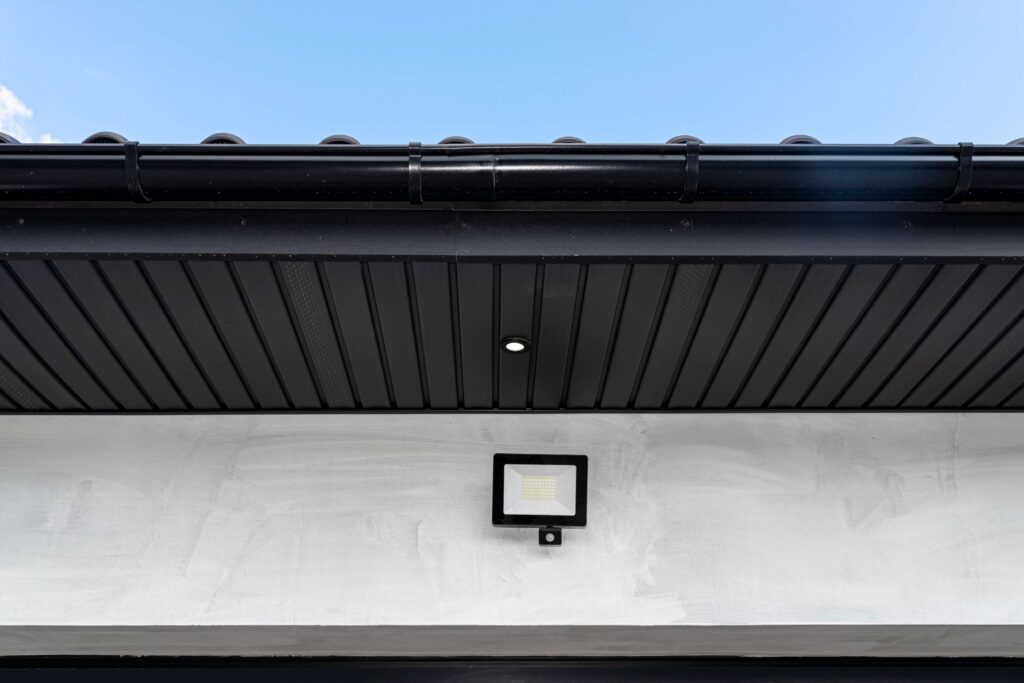
A light above the garage door covers a lot of ground at once. It lights the driveway, helps people safely walk to the front door, and makes it easier to pull in at night without guessing where the basketball hoop or garbage cans are.
Garage flood lights also help discourage unwanted visitors.
Try mounting the fixture high enough to spread the light evenly across the driveway instead of creating one super bright hotspot.
Angling the light slightly downward also helps reduce glare for neighbors and passing cars.
Motion sensor flood lights work especially well here because they only turn on when needed. That saves energy and immediately grabs attention when someone walks up the driveway.
Also Read: Govee Alternatives
#2 Near The Front Entry
Your front door area should always be well lit. Guests need to see where they are stepping, delivery drivers need visibility, and honestly, nobody likes fumbling with keys in the dark.
A flood light near the front entry creates a welcoming feel while also improving security. It does not need to be blindingly bright either.
Many homeowners install lights too high above the entry and accidentally create harsh shadows across faces. A better setup is usually near the eaves or mounted slightly to the side of the door.
If your home has a covered porch, flood lights can work alongside softer porch lighting.
The porch light handles ambiance while the flood light gives broader coverage across steps and walkways.
#3 Back Patio Or Deck Area
Backyards tend to get ignored until somebody hosts a barbecue or tries to let the dog out at night. Then suddenly everyone realizes half the yard disappears into darkness.
Flood lights around patios and decks make outdoor spaces much more usable after sunset.
They help during cookouts, family gatherings, late-night conversations, or even simple things like taking the trash out.
One mistake people make is relying on a single light above the back door. That usually leaves dark corners everywhere else. A better setup often includes lighting from multiple angles so the whole area feels balanced.
Here are a few smart spots around patios and decks:
- Mounted under roof eaves
- Attached to deck posts
- Installed at opposite corners of the house
- Positioned near stairs and seating areas
You also do not need industrial-strength brightness here. Warm LED flood lights usually create a more comfortable atmosphere for outdoor living spaces.
#4 Side Yards And Walkways
Side yards are some of the darkest areas around many homes. They are narrow, easy to overlook, and usually have very little existing lighting.
Also Read: Lights For Long Driveways
Unfortunately, they are also common pathways for intruders.
Flood lights along side yards improve both safety and visibility. They help people avoid tripping hazards, uneven pavement, hoses, or landscaping edges while also eliminating hidden dark zones.
The key here is subtle coverage.
Super bright lights in a narrow walkway can feel harsh and uncomfortable. Smaller flood lights spaced properly often work much better than one massive fixture.
Try aiming the lights along the path instead of directly across it.
#5 Driveway Corners
Driveway corners are excellent places for extra flood light coverage, especially for larger properties or long driveways.
These spots help fill in the gaps that garage-mounted lights sometimes miss.
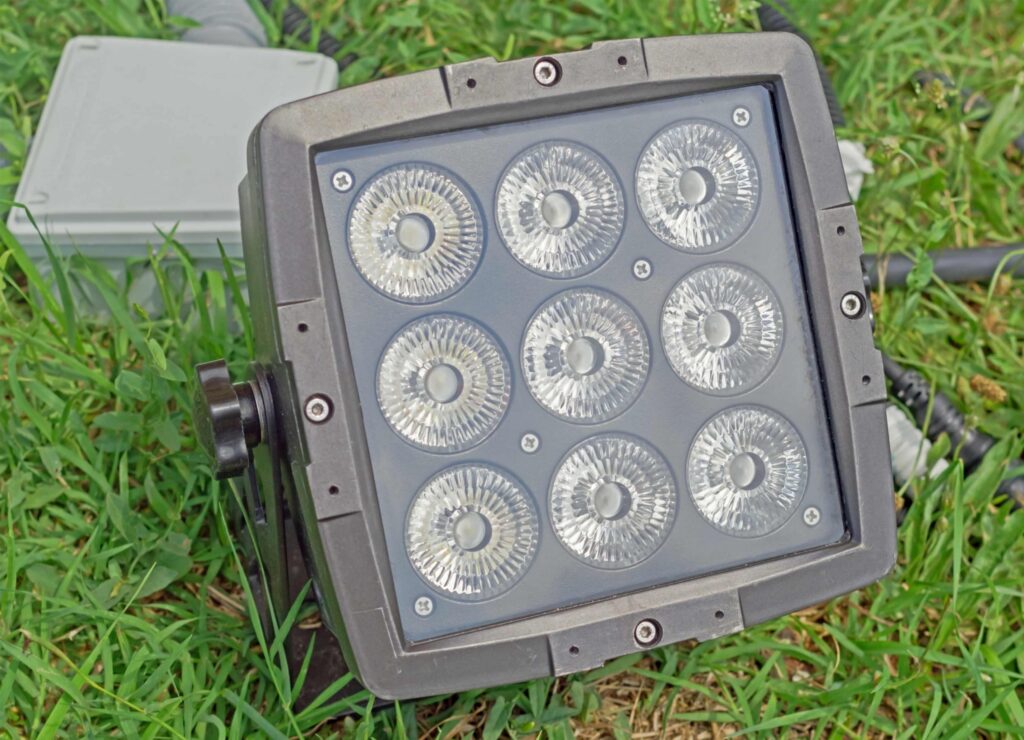
Corner-mounted lights create overlapping coverage, which is important because shadows are where visibility problems usually happen. One light alone rarely covers everything evenly.
This placement also works really well for homes with multiple parking spaces, RV parking, detached garages, or curved driveways.
If possible, install the fixtures high enough to widen the light spread without aiming directly into neighboring homes. Nobody wants their bedroom glowing like daylight because of a poorly aimed flood light.
#6 Near Basement Doors Or Windows
Basement entrances and windows often sit lower than the rest of the house, which naturally creates darker areas around them.
Those spots can become safety hazards at night, especially near stairs or uneven ground.
Adding flood lights near basement access points improves visibility and makes the area feel much safer overall.
Motion sensor lights are especially useful here because basement areas usually do not need constant lighting. The light activates only when someone approaches, which helps conserve energy while still keeping the space protected.
Also Read: LED Light Bulbs That Look Like Incandescent
This setup is also helpful during storms, power outages, or emergency situations when people may need quick access to lower levels of the home.
#7 Around Sheds, Detached Garages, Or Fences
Detached structures are easy to forget when planning outdoor lighting.
Then one night you walk out to the shed looking for tools and realize you can barely see two feet in front of you.
Flood lights around detached garages, sheds, and fence lines improve visibility across the entire property. They also help protect expensive equipment, lawn tools, bikes, and storage areas.
Here are some good placement options for detached structures:
- Above shed doors
- On fence corners
- Near outdoor storage areas
- Facing pathways between buildings
Fence-mounted flood lights can also help define property boundaries without needing lights everywhere.
#8 Near Gates And Backyard Entrances
Gates and backyard entrances are another smart place for flood lights because these are natural access points around the property.
A dark gate creates an easy hidden area, especially in larger backyards.
Lighting these spots improves visibility while making it easier for family members and guests to move around safely at night.
Motion-activated flood lights are extremely popular here because they immediately light up the area when someone enters. That sudden burst of light alone can discourage suspicious activity.
If your backyard connects to an alley, wooded area, or side street, this placement becomes even more important.
Where NOT To Put Flood Lights On House
Good placement matters, but avoiding bad placement matters too. A poorly positioned flood light can create more problems than it solves.
Some common mistakes include:
- Mounting lights too high
- Pointing fixtures directly outward instead of downward
- Installing lights behind trees or gutters
- Aiming lights into windows
- Using extremely bright bulbs in small spaces
Lights mounted too high often create harsh shadows and uneven coverage. Fixtures aimed straight outward usually produce glare instead of useful lighting.
And lights blocked by landscaping barely do anything except light up branches.
It is also smart to avoid over-lighting your property. More brightness does not always mean better security. In some cases, super bright lights can create deeper shadows nearby, which actually reduces visibility.
Bottom Line
Flood lights work best when they are placed around the areas people actually use.
Garage doors, front entries, patios, side yards, gates, and detached structures are all excellent locations to put flood lights on homes.
You do not need dozens of fixtures or stadium-level brightness to make your home safer and easier to navigate at night. A handful of flood lights usually does the job beautifully.
Take a walk around your property after dark and pay attention to the spots that feel too dim, awkward, or difficult to see. Those areas will quickly show you exactly where flood lights can make the biggest difference.
Our Blogging Experts

James Zogran – Head of Operations
At Dominion Lightworks, we’re a team of experienced lighting professionals dedicated to providing exceptional lighting solutions for residential and commercial properties.
Our Locations
Christmas Lighting in Richmond, VA
1394 Manakin Rd
Manakin Sabot, VA 23103
Mon-Fri 7 am – 10 pm
Sat-Sun Closed
Landscape Lighting in Richmond, VA
595 Weaver Brook Walk
Ridge, VA 23233
Mon-Fri 7 am – 10 pm
Sat-Sun Closed
Popular Articles


